
UVA vs UVB Rays Skin Damage: What's Actually Different
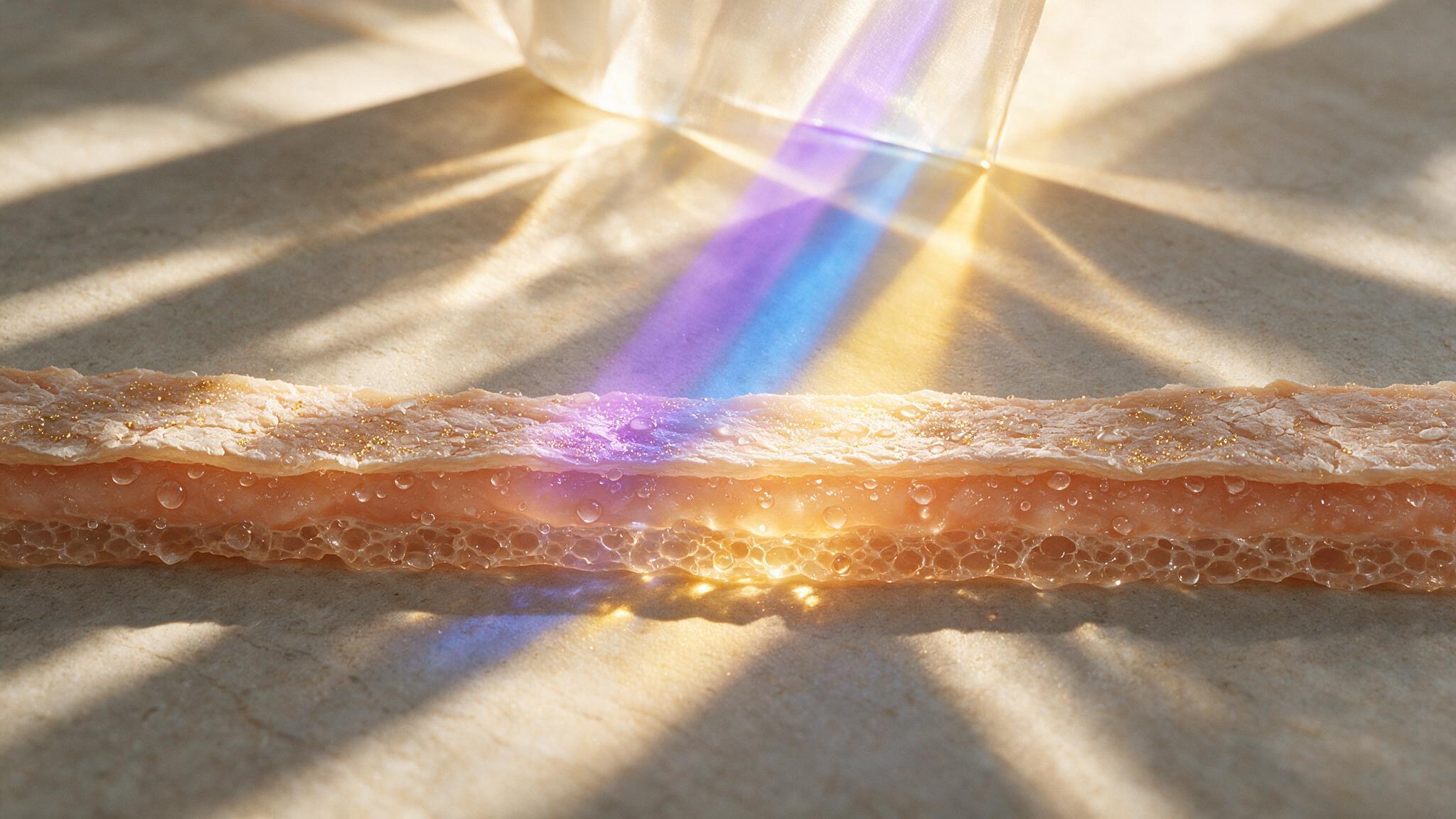
UVA vs UVB rays: what's actually damaging your skin
Stand by a sunny window in Chennai for ten minutes, or wait at a traffic signal in Mumbai at noon, and your skin is taking in two different kinds of damage at the same time. Most people lump "sun exposure" into one category. It's actually two, and the difference changes how you should be choosing sunscreen and when you need to reapply it.
What UVB does
UVB is the one everyone's heard of. Short wavelength, high energy, absorbed almost entirely by the outer layer of skin. It's what turns you red after too long outdoors, and it's strongest between 10 am and 4 pm. It also drops off in winter, which is part of the problem. People assume that means they're safe. Often they're not.
What UVA does, and why it's the sneakier one
UVA makes up around 95% of the UV radiation hitting the earth's surface. It doesn't stop at the outer layer, it goes deeper, into the dermis, and it does this year-round, through cloud cover, through glass. That afternoon drive with sun coming through the windscreen? Still UVA exposure, no sunburn required.
This is the ray behind photoaging: collagen breakdown, sagging, the kind of dullness that shows up gradually and gets blamed on "just getting older." It also oxidises melanin that's already in the skin, which is why you can tan within minutes without ever burning. Indian skin tends to run higher in active melanin, so for a lot of people here, UVA-driven tanning and pigmentation shows up as the daily concern, ahead of sunburn.
Why this matters for pigmentation specifically
Both UVB and UVA damage skin cell DNA, through different routes. UVB causes direct damage, structural errors in the DNA strand that scientists call pyrimidine dimers. Skin responds by producing more melanin to shield itself. That's a tan. A stress response, not a glow.
UVA takes the indirect route: free radicals that degrade collagen and the proteins keeping skin even-toned. Because none of this shows up as a sunburn, people underestimate it for years. Then dark spots seem to appear out of nowhere at 30 or 35, once collagen loss crosses some invisible line.
If you're dealing with melasma, post-acne marks, or general unevenness, daily UVA exposure is often the reason your treatment isn't sticking. You can apply a brightening serum every night and still get nowhere if you're walking into unprotected morning sun the next day.
What "broad spectrum" on the label actually means
SPF only measures UVB protection. A sunscreen with SPF 50 and no UVA coverage is doing half its job. That's where the PA rating comes in. PA+++ or PA++++ signals real UVA protection, and more pluses means more protection against the pigmentation UVA leaves behind.
Broad spectrum covers both, in theory. In practice, formulation decides whether you'll actually wear it. A sunscreen that leaves a chalky white cast on deeper Indian skin gets used sparingly, or skipped, or never reapplied. A sunscreen sitting in a drawer protects nobody.
This is the exact gap Haven Sky's Glow Guard Sunscreen (SPF 50 PA+++) was built to close: zero white cast on Indian skin tones, with niacinamide and rice extract working alongside the UV protection to even out tone at the same time.
When to actually worry
For UVB, the danger window is narrow: peak hours, summer, direct sun. For UVA, it's almost always. Overcast skies don't block it. Sitting near a window doesn't either. Reapplying every 3 to 4 hours outdoors isn't paranoia, it's just how the protection is designed to work.
The takeaway on UVA vs UVB skin damage is simple: sun protection isn't a beach-day thing. It's a daily thing, and the damage adds up just as quietly as the exposure does. Whatever your skin looks like at 40 will mostly be the result of decisions made well before then.